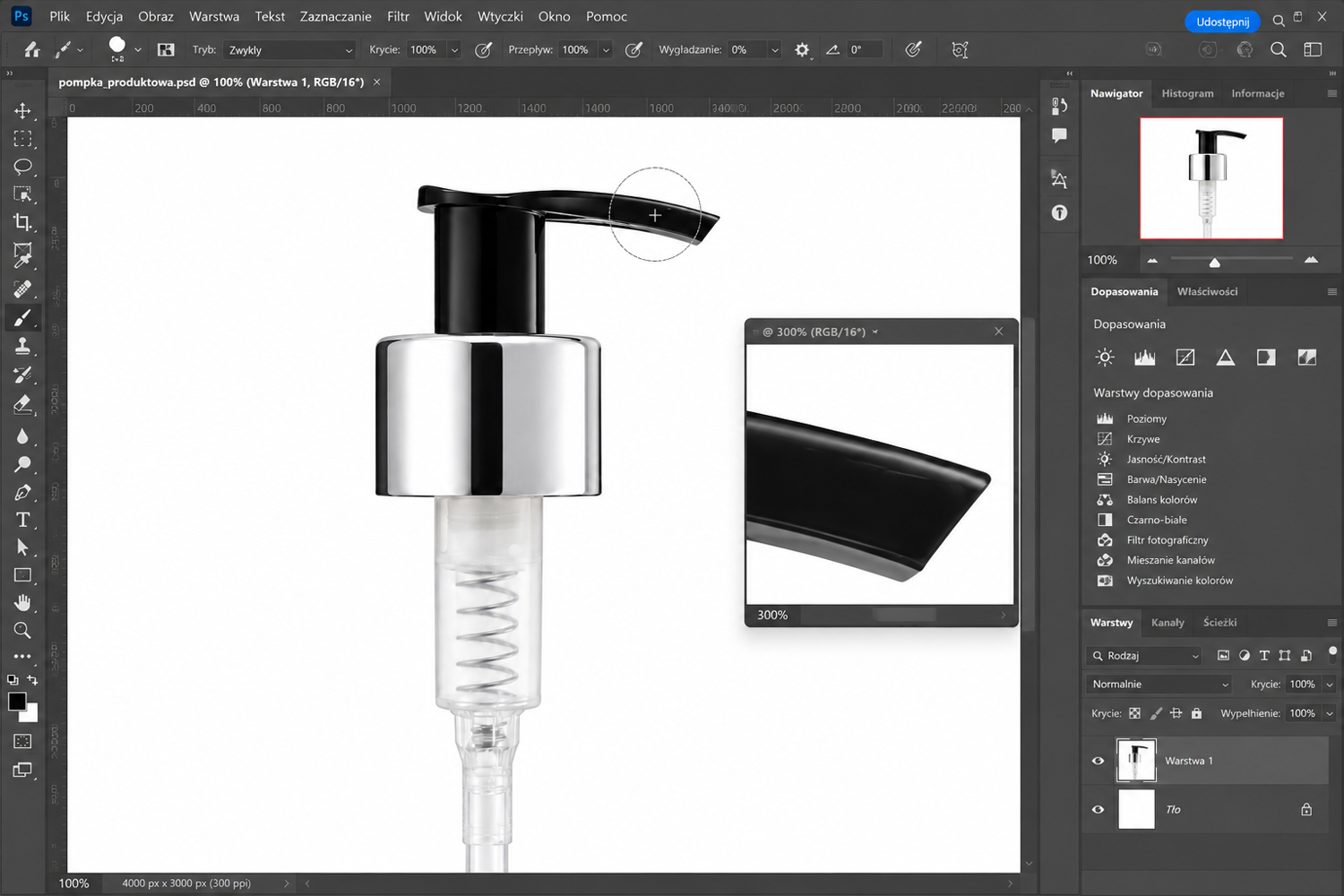
Sometimes the product already exists and can be photographed with the right choice of background, lighting and composition. This was the case with these dispensing and trigger pumps. A photograph of the actual product then becomes the starting point for further work.
However, the physical product is not always available. If it exists only as a design or model, its visual representation can be created in another way, for example using 3D modelling. In this project, the starting point was a photograph of the actual product.

The photograph becomes the basis for creating a clean, professional product image. Sometimes it is enough to refine and retouch it in Photoshop, but more often, a better result can be achieved by using AI to create a new catalogue image based on the original photograph.
Regardless of the method, the actual appearance of the pump, its proportions and key details are preserved. The finished image is prepared at the appropriate resolution so it can be used both online and in printed materials.
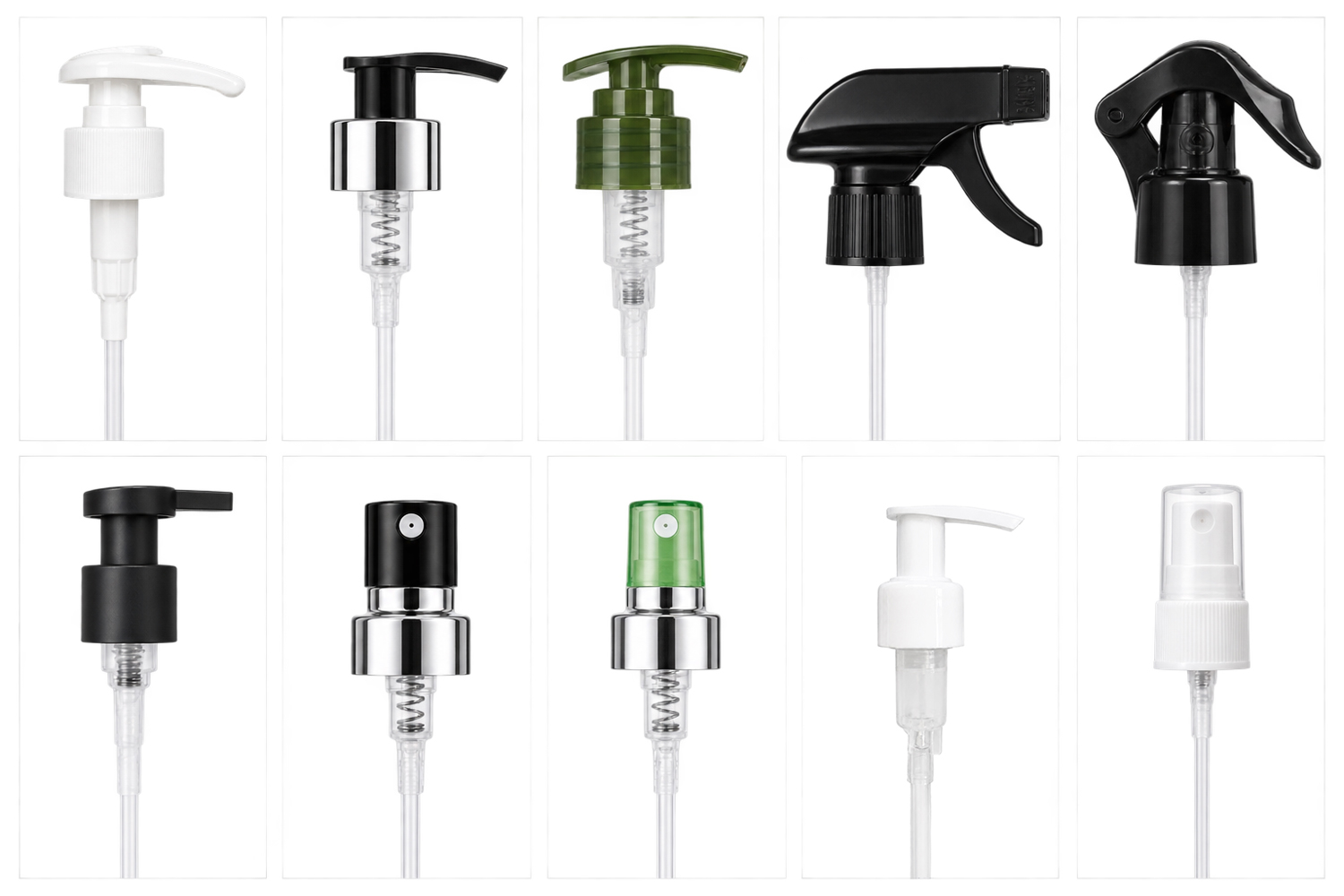
A single pump is just one element of the entire product range. The same approach can be applied to other models, creating a consistent series of photographs that presents different product variants in a uniform way.
The result is a complete set of packshots that can be used on a website, in a catalogue, price list or sales materials. Instead of a single image, the client receives an organised presentation of the entire product range.
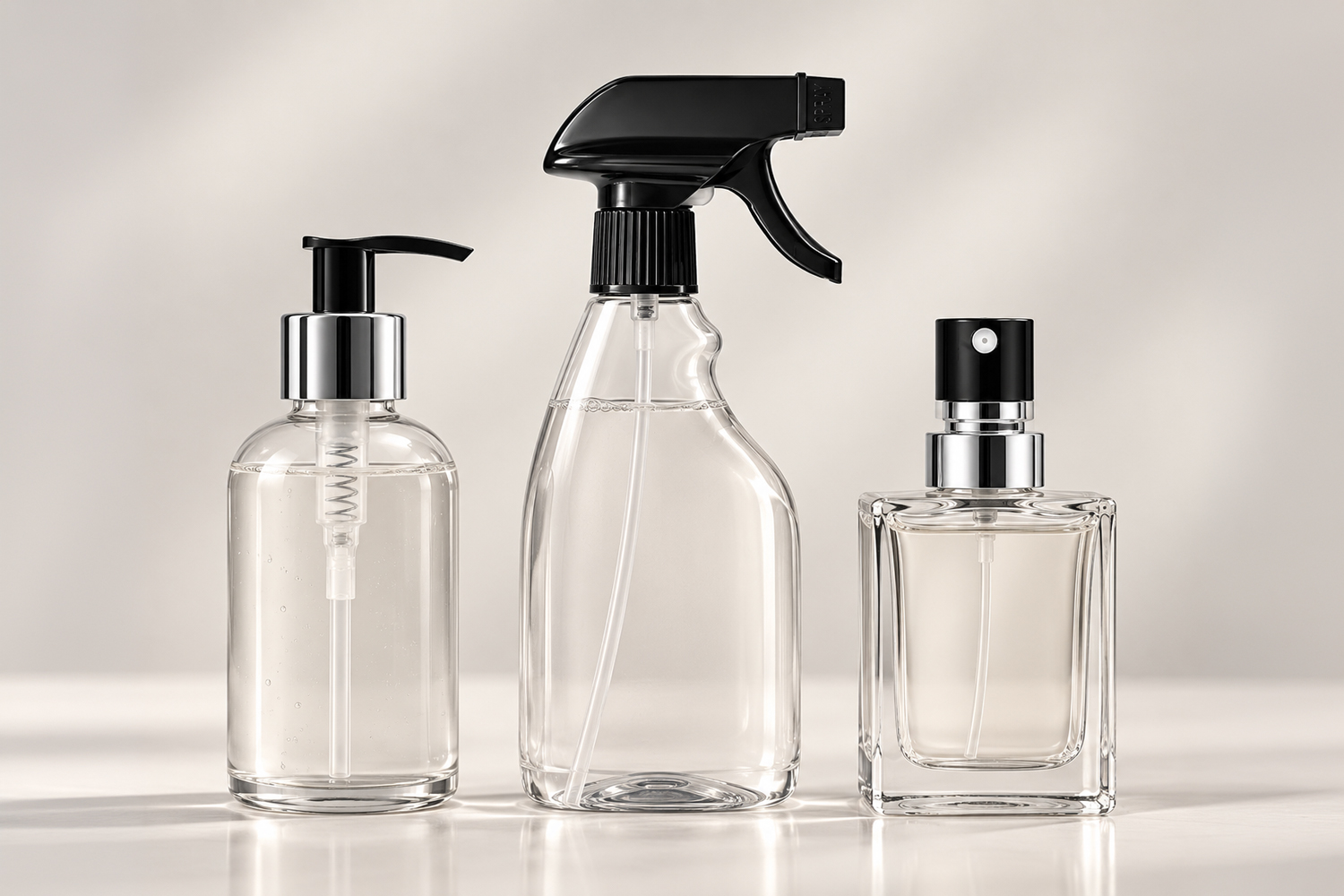
A packshot shows the product itself well, but it does not always make it easy to imagine how it will be used. The same model can therefore be presented in a more natural setting, showing the pump as part of a finished product and packaging.
This gives the viewer a completely different perspective. The product is no longer an isolated object on a neutral background, but becomes part of a situation in which it could actually be found.
The presentation can be taken a step further by showing the pump as part of a specific, finished product. A label can be added to a prepared package to create a visualisation showing how the complete product could look on a shelf or in the manufacturer’s offer.
This takes us from a single component to a complete product concept. Such a visualisation can be used in a catalogue, sales materials or when presenting a new product concept.
At this stage, the prepared visualisation can be brought to life by adding subtle movement. The product itself remains unchanged, while the animation presents it in a more natural and engaging way.
A gentle movement of the surroundings, light or the product itself gives the static image an additional dimension. This type of material can also be used to attract the viewer’s attention and make the product presentation more dynamic.