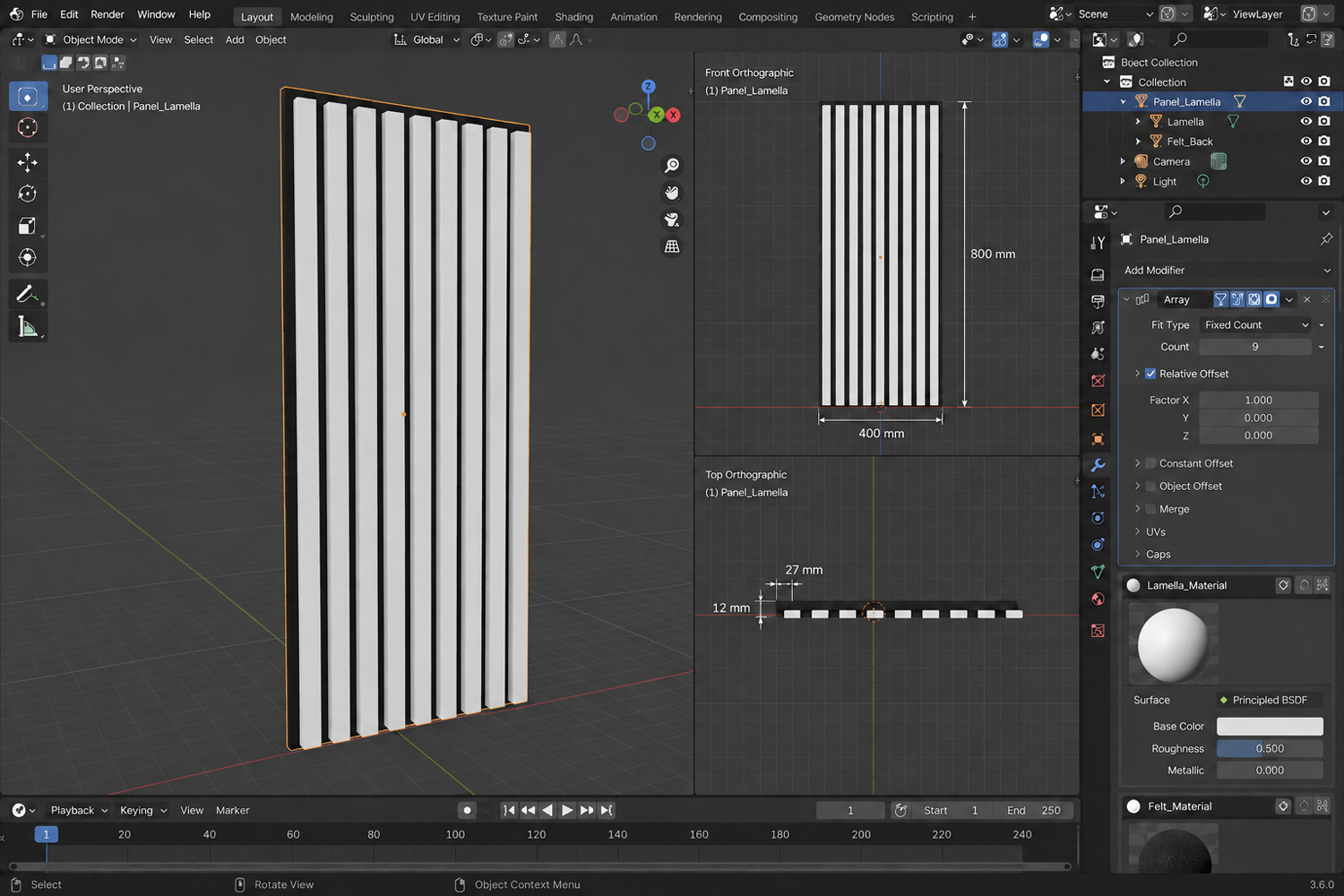
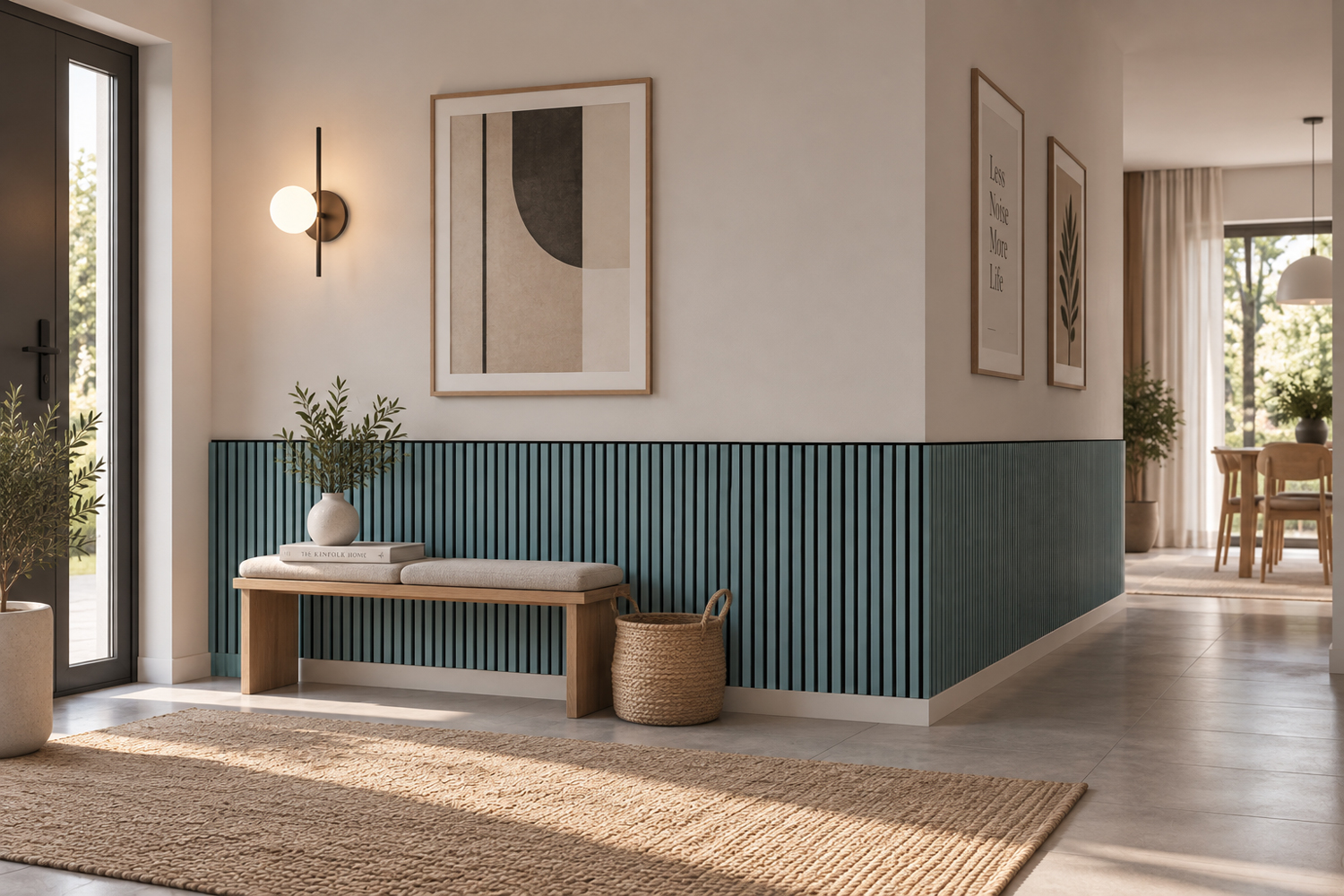
In the case of the panels, the starting point is not a finished product that can be photographed. The model is created from scratch in a 3D environment, based on information and specifications for the particular product.
This makes it possible to precisely develop its shape and prepare it for the next stages of presentation.
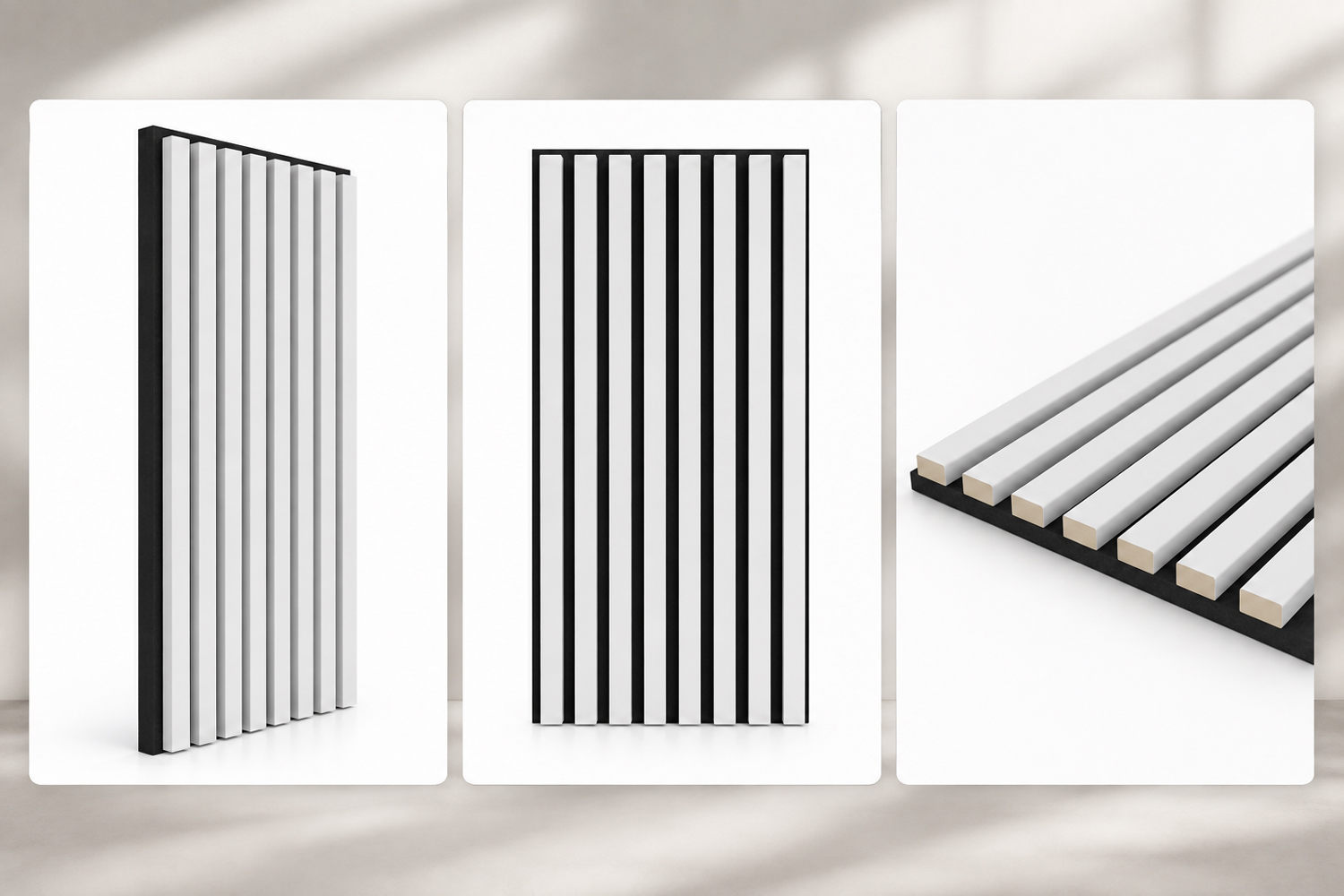
The finished 3D model makes it possible to create images of the product from selected angles. This allows its shape, construction and character to be shown from different perspectives, without the need to create a physical prototype.
These images can then serve as a basis for further development of product materials.
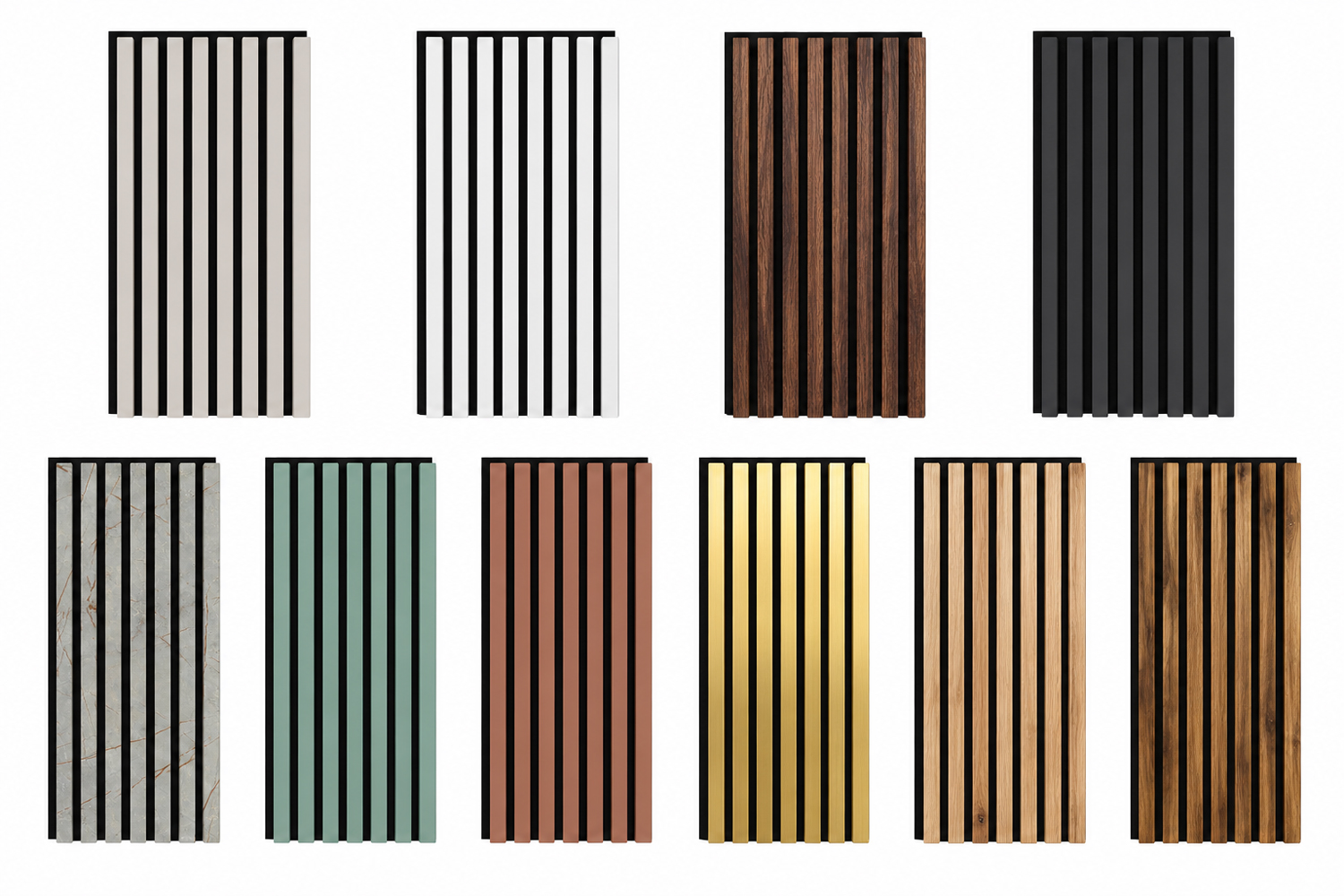
The same model can be presented in different colours and finishes. Changing the finish makes it possible to quickly show how the product will look in different variants, without having to create a separate model for each one.
This creates a consistent packshot set showing one model in different variants. The finished set can be delivered to the client and used in catalogues, offers, on a website or in other product materials.
Finally, the product can be shown not as an individual element, but as part of a specific space. An interior visualisation makes it possible to see how the panel looks in its intended application and how it works together with the other elements of the arrangement.
This is a completely different way of presenting the product than a packshot, but the two images can complement each other.
The finished visualisation can be brought to life by adding an element that was not there before. In this case, a dog that has been calmly sitting on the rug suddenly gets up and runs towards the window, making the static scene feel like a real, lived-in interior.
It is a simple way to turn a single visualisation into something more. A short animation catches the eye and presents the product in a more natural, engaging context.